Drainage Solutions for Asphalt Surfaces
Proper drainage is critical for asphalt longevity, especially in Buffalo where heavy rain and snowmelt can cause significant damage. This guide covers common drainage problems and effective solutions.
Why Proper Drainage is Essential
Water is asphalt's worst enemy. Standing water or poor drainage leads to:
Common Drainage Problems
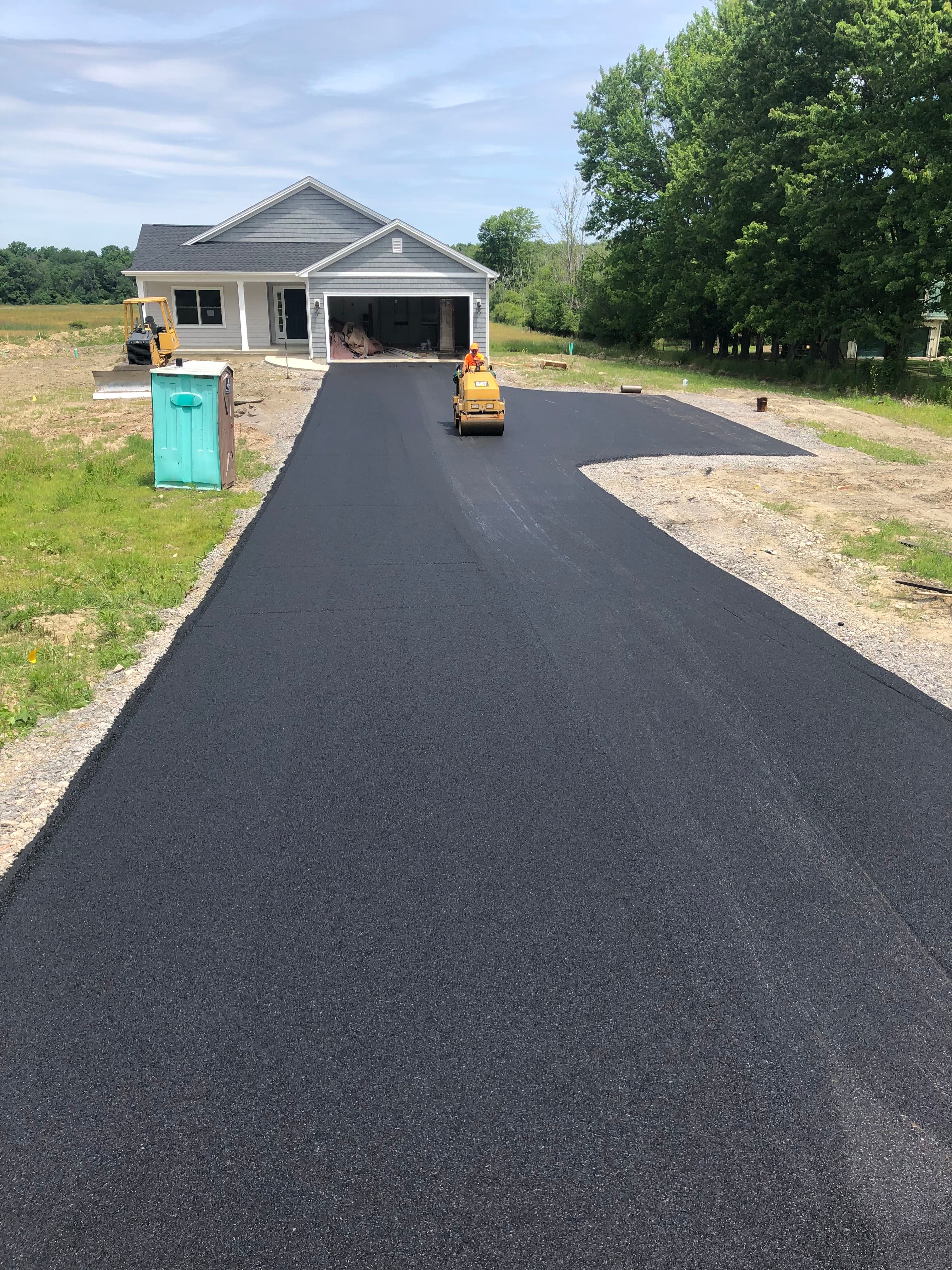
Standing Water
Water that pools on the surface after rain indicates improper slope or low spots.
Solution:
Regrade surface to minimum 2% slope, install catch basins, or overlay with proper slope correction.
Water Flowing Toward Foundation
Driveway slope directing water toward your home can cause foundation damage.
Solution:
Regrade driveway to slope away from foundation (minimum 2% grade), install swales or French drains.
Edge Erosion
Water running off edges erodes base material and causes edge failure.
Solution:
Install edge restraints, extend base beyond asphalt edge, or install drainage channels along edges.
Insufficient Slope
Flat or reverse-sloped areas prevent water from draining properly.
Solution:
Overlay with proper slope (2-5% grade), or complete removal and reinstallation with correct grading.
Drainage Solutions
Surface Grading
Proper slope is the foundation of good drainage. Asphalt should slope 2-5% away from structures.
- • Minimum 2% slope (2 inches per 10 feet)
- • 5% maximum for safety and comfort
- • Grade should direct water to drainage points
- • Can be achieved through overlay or complete replacement
French Drains
Perforated pipes in gravel-filled trenches collect and redirect subsurface water.
- • Best for areas with persistent water issues
- • Installed along edges or in problem areas
- • Requires professional installation
- • Effective for both surface and subsurface water
Catch Basins
Underground collection points with grates that capture surface water and direct it to drainage systems.
- • Ideal for low spots or large paved areas
- • Connect to storm drains or dry wells
- • Require periodic cleaning
- • Professional installation recommended
Swales and Ditches
Shallow channels that direct water flow away from paved surfaces.
- • Cost-effective solution for edge drainage
- • Can be grassed or lined with stone
- • Direct water to safe discharge points
- • Require minimal maintenance
Dry Wells
Underground chambers that collect and slowly disperse water into surrounding soil.
- • Solution when storm drains aren't available
- • Requires adequate soil drainage
- • Sized based on drainage area
- • Professional installation essential
Drainage Maintenance
When to Call a Professional
Complex drainage issues require professional assessment and installation:
- • Persistent standing water despite surface repairs
- • Foundation water problems
- • Large-scale drainage system installation
- • Multiple drainage problems
- • When grading requires significant elevation changes
Need Professional Drainage Solutions?
Capozzi Paving can assess your drainage issues and provide effective, long-lasting solutions.
Call (716) 681-3600